
Weekly Brief Jan 26 thru Feb 1
MEMBERS & VISITORS:

The Global Race to Build AI and Energy Infrastructure: Opportunity or Dependency?
Global race for AI infrastructure and energy
Global Innovation Report: The Invisible Foundations
This is Professor Singer and I have prepared another weekly global innovation report for you. You can read the full report below in the comments.
All right, welcome to this week’s briefing explainer. This week, we’re connecting the dots between a few headlines that honestly seem totally random, but they actually tell one single story. It’s about how the invisible foundations of our future are being built right now at an absolutely incredible speed and scale. So, what do they have in common? I mean, on the surface, not a lot, right? But if you dig just a little deeper, you find they are all core pieces in a new kind of global race. A race that’s heating up, not just on the ground, but way up in the sky, too.
Let’s start there. So, let’s kick things off with this global race for what we call **compute**. We’re talking raw processing power. And look, this isn’t just about making your laptop faster. No way. This is about building the absolute engines for the next era of artificial intelligence. And it’s being fought on two very different fronts. So, you’ve got this battle happening right here on Earth. To really scale up AI, tech giants are realizing that just buying chips from a few big suppliers, well, that’s not enough anymore. They’re realizing, you know, they need to build their own custom hardware—stuff that’s perfectly tuned for what they need to do.
Okay, perfect example. Take Microsoft’s new **Maya 200 chip**. What it’s for is really, really telling. It’s not built for that super heavy lift of training a new AI model from scratch. Instead, it’s all about **inference**. That’s the much more common job of just using an AI that already exists to get an answer. Making that inference cheaper, that is the key to unlocking AI services for billions of people. And here’s where it gets interesting for everyone else. When cloud companies can lower their costs, they can pass those savings on. This isn’t some abstract idea. We’re talking cheaper AI-powered translation, agricultural advice, and even medical diagnostics for innovators all over the world, especially in the global south.
But this race on the ground is being mirrored by one that is frankly even more ambitious, way above our heads. **One million.** Yeah, you heard that right. That is the number of solar-powered orbital data center satellites that SpaceX wants to put into orbit. I mean, calling this plan audacious, that’s a massive understatement. This is a vision for an entirely new layer of global infrastructure. They’ve actually gone and asked US regulators for the green light. The goal here is to build a whole new infrastructure for AI computing in space, powered by near-constant sunlight. The thinking behind it is pretty simple, really: they want to escape the insane energy demands and costs of data centers down here on Earth. And believe me, this isn’t just some wild idea because just this week, China’s main space contractor announced its own 5-year plan for what they’re calling a “space cloud.” The goal? Gigawatt-class power stations in orbit to fuel computers up there.
So, you’ve got this incredible race for compute going on. And at the exact same time, there’s this other quieter race happening to actually power the whole thing. Because let’s be real, none of these huge AI ambitions, whether they’re on the ground or up in space, none of it is possible without a total revolution in energy. And that brings us to the second piece of this puzzle: the actual foundations of power. What you’re looking at here is a perfect example of one of those really critical but kind of unglamorous steps. A Japanese company, **Idemitsu**, is building a pilot plant for something called solid electrolytes. This stuff is the key to the next generation of solid-state batteries, making them safer and way more energy dense.
See, a pilot plant like this is the absolutely essential bridge that takes something from a cool lab discovery to a product you can actually afford and mass-produce. And again, just think for a second about what that really means. Cheaper, safer batteries. That doesn’t just mean a fancier electric car for people who can already afford one. It means reliable power for clinics and schools from solar. It means making electric buses and motorcycles affordable for things like public transit and last-mile delivery. And this isn’t just theory. This scale-up is happening now. In Vietnam, they’ve just broken ground on a huge new battery plant, and with technical help from the industry giant **BYD**, it’s aimed directly at commercial vehicles. This is how you build regional industrial power.
Okay, so we’ve got this massive race for compute and we have this parallel race for power. So what’s the real story? What’s the thread that ties all of this together? All right, here’s the connection: these aren’t two separate races at all. They’re really just two sides of the same coin. A massive global project to build the fundamental infrastructure for the entire next generation of technology. You can think of these as enabling platforms, right? They’re the chips, the power sources, the data pathways that literally everything else is going to be built on top of. And what that means is that the big news this week wasn’t really about some flashy new app or the latest gadget. No, it was about the plumbing—the deep, essential, industrial-scale work that actually makes all that future innovation possible.
And that right there raises the enormous stakes for nations everywhere that are trying to secure their spot in that future. You see, as this new global infrastructure is getting built, it’s presenting every single country, especially in the global south, with a huge choice. It’s like a fork in the road between real opportunity and deep dependency. On one side, you’ve got the opportunity: getting access to cheaper AI and affordable local energy to solve actual real-world problems. But on the other side, there’s a big risk: becoming just a supplier of data, a consumer of tech, completely dependent on these platforms that are built and controlled somewhere else.
So, how do you seize that opportunity? Well, it takes a really clear strategy. It means when you negotiate, you’re negotiating for capability. You know, things like local assembly, training for your people, not just buying finished products off the shelf. It means investing in your own local talent to build up AI expertise. And crucially, it means getting a seat at the table to help shape the international rules for space and for data.
So, look, the foundation for the next entire era of technology is being poured right now as we speak. It’s happening in data centers in Iowa. It’s in regulatory filings in Washington. And it’s in those new battery plants popping up in Japan and Vietnam. The scale is immense and the speed is just accelerating. And all of that leaves us with the biggest question of all. The foundation is being laid. That much is clear. We can see who’s pouring the concrete and laying the steel. The real question, the one that matters, is: who gets to build the future that rests on top of it?
If this week’s signals stirred your curiosity, don’t just watch innovation happen—step into it with us at **Tharaka Invention Academy**, where you can become an active apprentice innovator, inventor, and practical problem-solver for your community and beyond.
💡 Want to unlock the secret to solving real problems with AI?
As a special bonus, you can now get instant access to one of Prof. Singer’s most powerful resources —
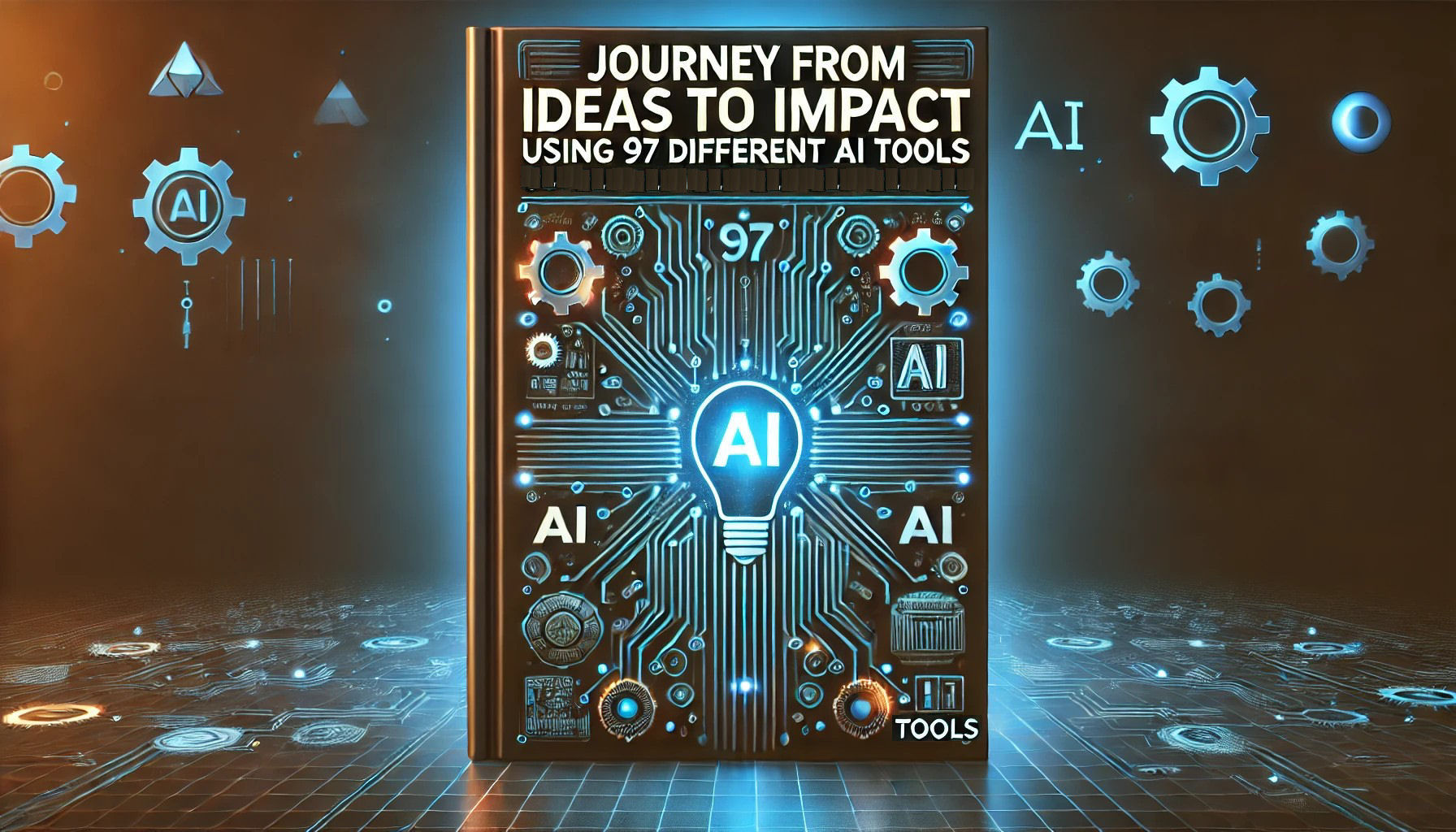
“Journey from Ideas to Impact Using 97 Different AI Tools” — completely FREE! Get your copy now! Just visit 👉 HERE.
🎁 Get it instantly — no delays, no waiting. One favor please. Just tell us what you think aboaut it.
This practical guide is packed with the exact tools, tips, and examples you need to solve problems, launch inventions, and lead innovation—whether you’re a student, creator, entrepreneur, or lifelong learner.
Discover how anyone can build the mindset, skills, and knowledge to become an effective problem-solver, innovator, or inventor at the Tharaka Invention Academy. The post entitled “Global Innovators: 101 Careers Transformed by Invention Skills” contains links to many more similar stories about these people worldwide.
Questions?? Contact me any time at profsinger@inventionschool.tech
We have published other informative posts on Invention School’s website which may interest you. To view our entire catalog of over 1000 posts go to inventionschool.tech/category/blog/ or use our handy search tool to find topics of interest to you.
Mechanical/Solar Engineer, Prof. Oku Singer
(21)