







BUILD A FAMILY THAT CAN SOLVE TOMORROW’S PROBLEMS
Build a Family That Can Solve Tomorrow’s Problems
Four problems. One morning. A machine stops. A customer walks away. A school assignment goes nowhere. And yesterday’s path to school is under water. What would your family do next?
Meet two families. Same neighborhood. Similar resources. The same ordinary intelligence, care, and determination. But over time, one family has been practicing something different: how to turn a problem into a question worth investigating.
Both families make sensible first moves. A repair is attempted. A price is reduced. A teacher is consulted. A safer route is chosen. Experience matters. But quick relief and lasting improvement are not always the same thing.
Amina’s science assignment asks how to make a classroom cooler. Her first idea is expensive. She almost gives up. Then she remembers a TIA exercise: define the problem before defending a solution. “Cooler for whom? At what time? With what materials?” Now she has questions she can actually investigate.
She tries a TIA Problem Pal—not to write her answer, but to challenge it. What has she overlooked? Which assumptions need testing? The screen cannot measure her classroom. So Amina asks classmates, watches where sunlight falls, and compares simple possibilities. The real investigation is hers.
At her tailoring stall, Njeri sees fewer repeat customers. Her first thought: lower prices. But she has learned to test assumptions. She asks one customer what matters most. The surprise? It is not only price. Reliable collection times and clearer fitting choices matter, too.
With a market-research Problem Pal and a simple TIA worksheet, Njeri drafts two service offers. She checks the costs before printing anything. Then she asks three people which they would actually use. She has not found a guaranteed business. She has found a safer way to learn.
Across the lane, Daniel’s workshop machine jams for the third time this month. He can make it run again. But why does the fault return? He maps the sequence, separates symptoms from possible causes, and sketches two ways to reduce strain. Experience meets systematic invention.
The first prototype looks promising—until the trial. It slows the work and gets in the operator’s way. “So it failed,” Daniel says. Amina looks at the notes. “Or it told us what to change.” The idea was not the achievement. The learning was.
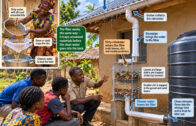
Kito has his own problem. Rain has blocked the usual walk to school. A shortcut helps some children, but not everyone. He asks: “Who still cannot get through?” He draws a map, talks to classmates, and marks the places adults have missed. A young mind sees what a familiar routine can hide.
That evening, the four compare notes. Njeri speaks about listening to customers. Daniel mentions his awkward prototype. Amina describes where classmates actually sit. Kito points at his route map. Then he asks the question that joins their stories: “Did we ask the people who have to use it?” Silence. Smiles. New sketches.
They open TIA’s Innovation Coach to help organize what comes next. Not one answer for everyone: a classroom observation, a customer service trial, a redesigned fixture, and a community conversation about safe access. Each idea needs evidence, feedback, and someone willing to try.
The next day they invite their neighbors in. Different experience brings better questions. The other family contributes practical knowledge the first one lacked. Because inventive thinking does not belong to one household. It grows when people learn with one another.
This is what Tharaka Invention Academy is designed to cultivate: curiosity, critical thinking, collaboration, experimentation, and the courage to improve. Through INNOVATE NOW, practical lessons and exercises, specialized Problem Pals, and the Innovation Coach, learning becomes something a family can practice in everyday life.
Tomorrow will bring new problems. The opportunity is to become more capable of meeting them—together. Don’t just solve today’s problem. Build a family that can solve tomorrow’s. Tharaka Invention Academy. Explore tharaka.inventionschool.tech.
(3)