
Growing Local Economies Through Invention
MEMBERS & VISITORS:
Growing Local Economies Through Invention
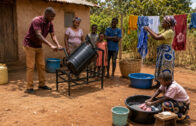
Manually operated washing machine in Kenya
Professor Oku Singer has developed a second generation of a manually operated washing machine based upon locally available skilled labor for producing them, and the durability and availability of components necessary to build them. The machine contains one bearing mounted moving part. Prof. Singer had developed an earlier prototype in Kenya based upon the apparent drudgery and hard work required to wash each and every piece of laundry by hand. The time required to wash a typical family’s weekly laundry could easily exceed four hours of hard work which could be better used on more profitable or enjoyable activity. Given Kenya’s demographic profile, a manually operated washing machine could be use by a large majority of families, though not all would be able to afford one, however inexpensive it might be.
The best market for a manually operated washing machine in Kenya would likely be in rural areas where there is limited access to electricity. These areas often have a high population density and a high poverty rate, so a low-cost, low-energy washing machine would be highly desirable. Additionally, people living in rural areas may not have the same purchasing power as people living in urban areas, so a low-cost washing machine would be more accessible to them.
Another market for such a washing machine in Kenya could be also in low-income urban areas, where people might have access to electricity but can’t afford to purchase an electric washing machine.
It’s important for Tharaka Invention Academy and Tharaka Invention Circle CBO to conduct market research to identify the specific needs and preferences of potential customers, as well as the availability of similar products. This will help to determine the best price point and distribution channels for the product.
_________________________________________________
Here are a few potential selling points for a manually powered washing machine in Kenya:
Low cost: As it does not require electricity to operate, it can be sold at a lower price point than electrically powered washing machines, making it more accessible to low-income households.
Energy efficiency: It does not require electricity to operate, which could save money on energy costs for households and reduces dependence on fossil fuels.
Durability: Being manually operated, the machine may have fewer moving parts, which can reduce the likelihood of mechanical failure and make it more durable.
Portability: Being manually operated, it can be made more portable than an electric washing machine, making it easier to move around and use in different locations.
Environmentally friendly: Being manually operated, it does not rely on electricity, which helps to reduce carbon footprint and environmental impact.
No infrastructure required: It does not require electricity or any other resources to operate, making it accessible to households that do not have access to power or running water.
Suitable for off-grid living: It’s a good option for people living in areas without access to grid electricity.
Low maintenance: Being manually operated, it may have fewer moving parts, which can reduce the likelihood of mechanical failure and make it less expensive to maintain.
_________________________________________________
Here are a few ways to encourage local craftsmen to manufacture and sell a manually powered washing machine through their own sources:
Provide training: Offer training on how to manufacture and assemble the washing machine. This can include providing technical drawings, instructions and hands-on training.
Supply raw materials and components: Provide local craftsmen with the raw materials and components needed to manufacture the washing machine at a reasonable cost. This can include plastic parts, metal parts, and other components.
Establish a support network: Establish a support network for local craftsmen to provide ongoing technical support, troubleshooting, and advice.
Create a fair trade system: Create a fair trade system that ensures that the craftsmen are paid a fair price for their work. This can include setting prices for the washing machine that reflect the cost of production and labor.
Promote their work: Promote the work of local craftsmen through advertising and marketing campaigns. This can include showcasing their work at trade shows, on social media, and in local communities.
Provide access to funding: Provide access to funding for local craftsmen through microfinance or other financial services. This can help them to expand their operations, buy new equipment and increase production.
Provide market access: Provide local craftsmen with access to markets through partnerships with retailers, wholesalers, and online platforms.
Encourage a sense of community: Encourage a sense of community among the craftsmen by organizing workshops, training sessions, and other events where they can share their knowledge and skills.
It’s important to note that, in order to effectively encourage local craftsmen to manufacture and sell the washing machine, you need to understand their needs and priorities, as well as the challenges they are facing. It’s also important to establish a mutual trust and a long-term relationship with them, and to make sure that they are financially and technically supported throughout the process.
We have published other informative posts on Invention School’s website which may interest you. To view our entire catalog of over 780 posts go to inventionschool.tech/category/blog/ or use our handy search tool to find topics of interest to you.
Mechanical/Solar Engineer, Prof. Oku Singer
(43)